
Every young person we support has their own unique story and the challenges they’ve had to overcome. Their journeys often include ups and downs, moments of resilience, and incredible growth. Here, we share a few of their stories to offer a glimpse into their experiences and strength.
Our
Stories
Volunteer View
Stage Lights

Arriving
in the UK
When I stood in the passport queue at Gatwick, I was terrified. I slipped under the barrier, tapped a Border Control guard on the shoulder, and said, “I am here to claim asylum. I can’t return.” I waited for an hour while the officer took my passport, and eventually I was led to a small interrogation room upstairs. As we walked, I overheard the two men escorting me saying, “We need to be clever about this one.” When they searched my luggage, they threw everything around, then told me to pick it all up and repack it.
Because I had arrived in the UK with a small amount of savings from working, I wasn’t eligible for financial support. I travelled to Croydon, where the Home Office was, and stayed in a B&B for a week. That first week was frightening – I didn’t know what I was supposed to do beyond waiting, and I worried constantly about whether I would receive help, or how long my little money needed to last.
I barely ate.

The Waiting
I had read a lot about the asylum system, but nothing prepared me for its reality. The government says a claim takes 3–6 months, but that is far from true. It took me exactly one year to be granted asylum and even that is considered unusually fast. Many people wait two years or more.
I constantly chased the Home Office and even contacted three MPs to advocate for me. Eventually, I received a phone call offering me accommodation at an asylum hotel in Chiswick, where I stayed for just under a year.
Those first two weeks were the hardest. I needed something to do! I couldn’t sit alone in that room all day. I connected with West London Welcome, a refugee centre, where I received legal advice and began volunteering every Tuesday. Through them I was introduced to Bollo Brook Youth Centre. Since I wasn’t allowed to work, I threw myself into volunteering, and this is where I discovered my passion for acting, film, and theatre.
That became my life for a year. I volunteered on projects at Bollo Brook, and the minute I received my refugee status, they found me my first job on a film set. Volunteering was rewarding, but the year itself felt like living in limbo – powerless, and not in control of my own life.

Youth Community Home
When my asylum status came through, I was shocked. I’d been convinced my claim would be refused and I’d need to win an appeal in court. Perhaps I was being pessimistic, but when I opened the letter and saw that I had been granted asylum, I couldn’t believe it. The letter gave me 30 days to leave the hotel and find somewhere to live.
I told my friends and began searching for housing, but without the right to work, I had no money for rent. I tried applying for council accommodation, and a week later, I was told a space had opened at the Youth Community Home (YCH).
S. visited the refugee centre while I was volunteering to meet me, and after an interview, I was offered a place. Moving into YCH felt like a weight had lifted. I finally had security, a roof over my head and no fear of suddenly being forced out. Living with other young people was a learning experience! Even though some were also asylum seekers, their stories were completely different from mine. Everyone was friendly and easy to talk to.
One memory that stays with me is from my first week at YCH. I had just gotten my first UK job, working at Wyndham’s Theatre. When I told J., she organised a spontaneous celebration that same day. I was so touched. They barely knew me, yet they celebrated my achievement as if I had been there for months.
YCH gave me the time and space to figure out my life. Many people find housing, but then have to take the first job they can just to afford rent, even if it’s not what they love. Because of YCH, I had the freedom to pursue something I was passionate about and to discover what I actually wanted to do with my future. The low rent also allowed me to save enough to pay the deposit on the place I live in now.
Leaving Youth Community Home
I knew it was the right time to leave YCH. I think I had outgrown it. I no longer needed the support in the same way, and I felt that someone else needed that place more than I did.
I started university and now work mainly as a freelance Theatre Technician around my study schedule. I’m two years into my degree now and loving it.
And I will always return to visit YCH … you won’t be able to stop me!
More Than Survival

What It Means
to Truly Live
My life began with challenges. Before I had the chance to know my father, he was imprisoned for his political beliefs. For my safety, my mother sent me to flee the country and to live with my aunt when I was four. Later, I learned my father had died in prison, and to this day, I don’t know what became of my mother. When my aunt passed away during my teenage years, I was left to navigate life alone, hoping for a better future.
I reached one of the lowest points in my life. Homeless, with nowhere to go and unsure where to turn, I felt completely trapped and in despair. Then I reached out to Leyla from the charity West London Welcome, who responded quickly, even sending me a video to show what Youth Community Home (YCH) looked like.
The house seemed warm and welcoming, a place where young people were treated with love and care. I was encouraged to see if I might feel at home there. To be honest, all I wanted was a safe place to rest, but YCH turned out to be so much more.
Leyla accompanied me on a visit to the house. Stephan, Jeaninne, and Ella (my caseworker) were there to meet us. They offered tea and cookies, a gesture I later learned is something they do for all guests. As we talked, I worried they might say no. What if they didn’t like me? What if they thought I wouldn’t fit in? But soon, I got the news: I was welcome to move in anytime.
Once I joined YCH, I slowly began to learn what it means to live, not just survive.
I discovered the importance of socializing. I was gently encouraged to join everyone at dinner, and, like a family, we’d sit together, share a meal, and connect. Dinner became more than just food; it was a moment of belonging. Even when one of us wasn’t feeling well, someone would bring food upstairs to ensure no one went without a meal. When we were down, they’d bring us flowers, encouragement cards, or even chocolates.
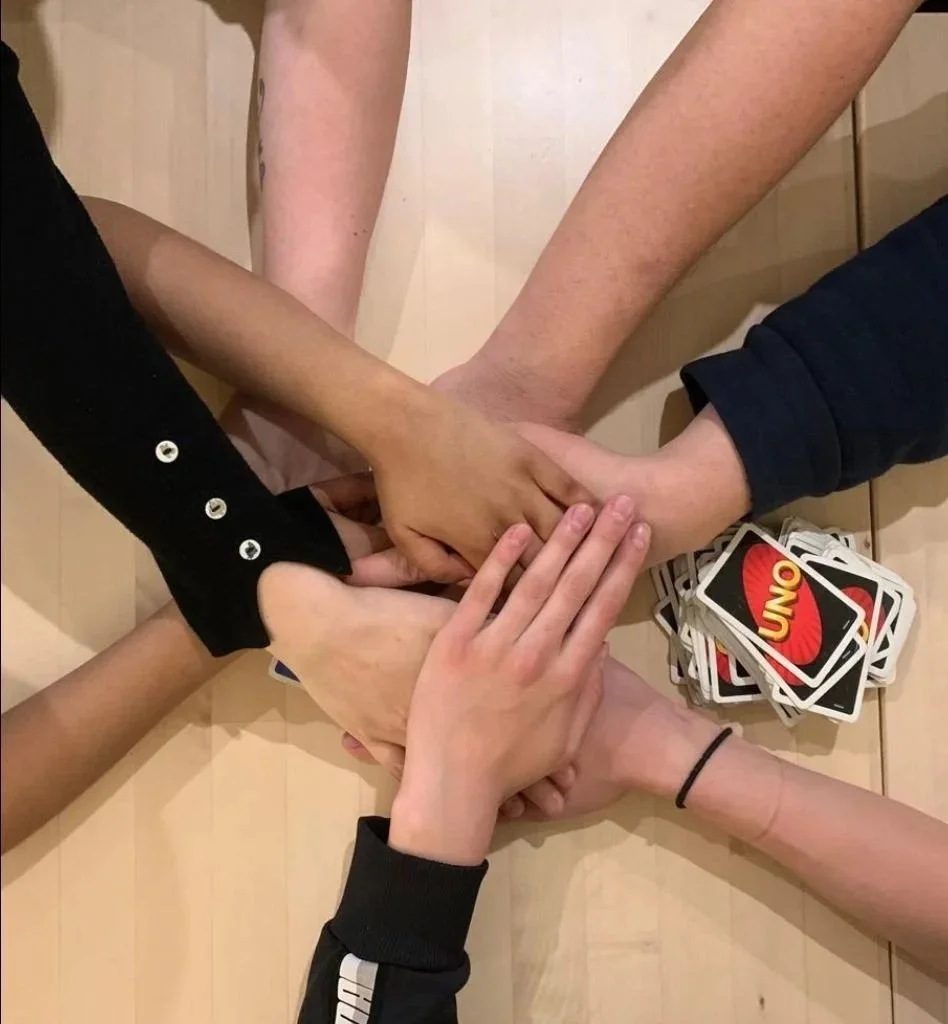
Game nights are big at YCH, with Exploding Kittens, Uno, and other card games bringing us together. Win or lose, the laughter and friendly competition bring us closer and give us a much-needed break from daily stress. Birthdays are equally special - even if the world forgets, YCH doesn’t. They make sure we feel valued and celebrated.
Fridays are cleaning days, and keeping our space tidy has become a source of pride, helping us build responsibility and teamwork.
YCH has been essential in my education journey. When I arrived, I was a Level 1 student and an asylum seeker. With the support of everyone at YCH, I succeeded in my asylum case and am now studying biomedical science at Westminster University. I know I couldn’t have achieved this without their guidance, encouragement, and belief in me.
During my time here, I’ve seen young people come and go. Some moved on sooner than others. I wasn’t in a rush; I needed time to find my footing and grow. I’m grateful that I had the chance to stay on as a live-in volunteer, allowing me to help others, share my story, and be a supportive presence for those finding their way. Before YCH, my life was a mess, but now I’ve found a sense of belonging and direction. I’m truly grateful for the life I have now.
Lydia
Volunteer View
A Year at Shelter Community
I have had the joy of being a Live-in Volunteer at Shelter Community for two and half years, and I can happily say that I will treasure all the memories. There were many iterations of the house, as with every new young person came a different atmosphere, dynamic and laughter.
Living in the house taught me about the speed of transformation, specifically how slow but rewarding it can be. It is often the little things that amount to the bigger, whether its stopping to have lunch with a resident in a lunch break, a Ferrero Roche’s left by someone’s door, a “Goodluck with your exam” sign or even teaching some bike-riding sessions on the nearby green. All these little moments, build together.
There’s a quote which says, “Isn't it funny how day by day nothing changes, but when you look back everything is different?”, and this is what I saw. Time and time again, each resident grows in self-assurance, confidence and skills of processing emotions. From my perspective, this continues to be the fruit of the consistent support of Jeannine, Stephan and the coaches. They consistently mirror what it looks like to love well and to be loved. Almost like two train tracks running parallel, journeying with the different young people, at YCH has taught me how to hold both, the joy and the sorrow. To weep for those who weep and to dance when things go well.
Anna Johnson
My Story
Expectations
I was a happy teenage girl, just living my life. The problems with my family started with a marriage proposal. In my Asian culture, when a girl grows up (16 or 17), the relatives and neighbours start discussing and planning for her marriage. My family wasn’t like this in the beginning. My father originally did not want me to get married: he wanted me to continue with my studies, as he had a plan in mind for how my life was meant to go. It seemed that the neighbours and relatives around them slowly changed his mind. Some of my uncles and aunts gave a proposal to my father for a man who was living and settled in the US.
But at this point I had already met the man I wanted to be with, the man who is now my husband.
When I told my parents about him they were angry, especially my father. His expectation was that I would automatically agree with his decision. In my family nobody had ever rejected their father’s instruction. In my family he was the one who took all the decisions. Everyone was so shocked. They were all angry with me.
After the initial outburst things looked like they might improve. My father started talking to me again and said he would agree with my decision as long as he could inspect my husband’s family. My father wanted to know about his money, what the family was like and their circumstances. My parents contacted an aunt back in our home country to find out more information: this was because my parents were living here in the UK with me.
My aunts and uncles had other intentions, though. They told lies about my husband and his family. As a result, they rejected him and were even more negative than before. I was so lonely and depressed. No one from my family was there to help me. My parents confiscated all my electronic devices so I could not talk to anyone, especially not my future husband. It was so hard.
I was still allowed to go to college. At the college, I was quiet, lonely and withdrawn. Two of my friends saw that I wasn’t concentrating or acting at all like myself. They asked what had happened and when I eventually told them, they told me to talk to the teacher. I told her everything.
My teacher got in touch with the safeguarding leader, who came and I again told her all that had happened. She suggested we take a few days to see if the situation would fix itself, and if it didn’t we would make a decision as to how they would help me.
I was very afraid to go home to my family: I felt safe at the college, or anywhere outside the house, but home did not feel safe anymore. I spoke with my father a few days later, hoping he would have calmed down or changed his mind. He hadn't. He said that I had ruined his reputation and that all our relatives agreed with him. I do not know why he had changed so much: in the beginning he was often good to me, but over time, he had become very controlling.
I had tried to speak with him but he had shown me that he would not change his mind, so the next day I told the safeguarding leader. They took me straight from college to Southall, to a charity that specialised in helping in these situations. I told the charity manager my story. On the same day, she sent me to a place where I could stay, unknown to my parents. I didn’t realise at the time that I was leaving my family. I was nervous and in shock as to how to feel: I was in over my head and it was so overwhelming.
In this new place I was totally alone and had no one to talk or share with. Luckily, there was one lady from my country there who helped me to speak to my husband. I didn’t feel comfortable sharing what had happened with anyone but him. Things didn’t always feel safe in this new place either. There was a shopkeeper and another person who was horrible to me. I was very scared.
My future husband told me to tell the teacher and not to speak to either of them. My teacher said the same thing, saying that if they do anything else, then we would tell the police. That helped a bit.
I was there for three months and during that time I carried on going to college, which helped me. It gave me something to do, and a place to recover from what I had been through. I didn’t have any contact with anyone from my family at that time. After three months my teacher got in touch with New Horizons Youth Centre and they sent me to Hounslow for three months. That place was also ok and I was able to talk to all the new people there. They helped me. After another three months, I came to the Youth Community Home (YCH).
Slowly, slowly my life has changed. Everyone here at the YCH is so supportive, kind and friendly. When I first arrived, I was very nervous and shy and didn’t know how to talk to people or how to cope without contact from my friends and family, but since I came here I have learnt how to be confident and how to manage so many new situations, especially with new people. I am still studying and hoping to find a job soon. I am also married now, and I feel so very happy with my life!
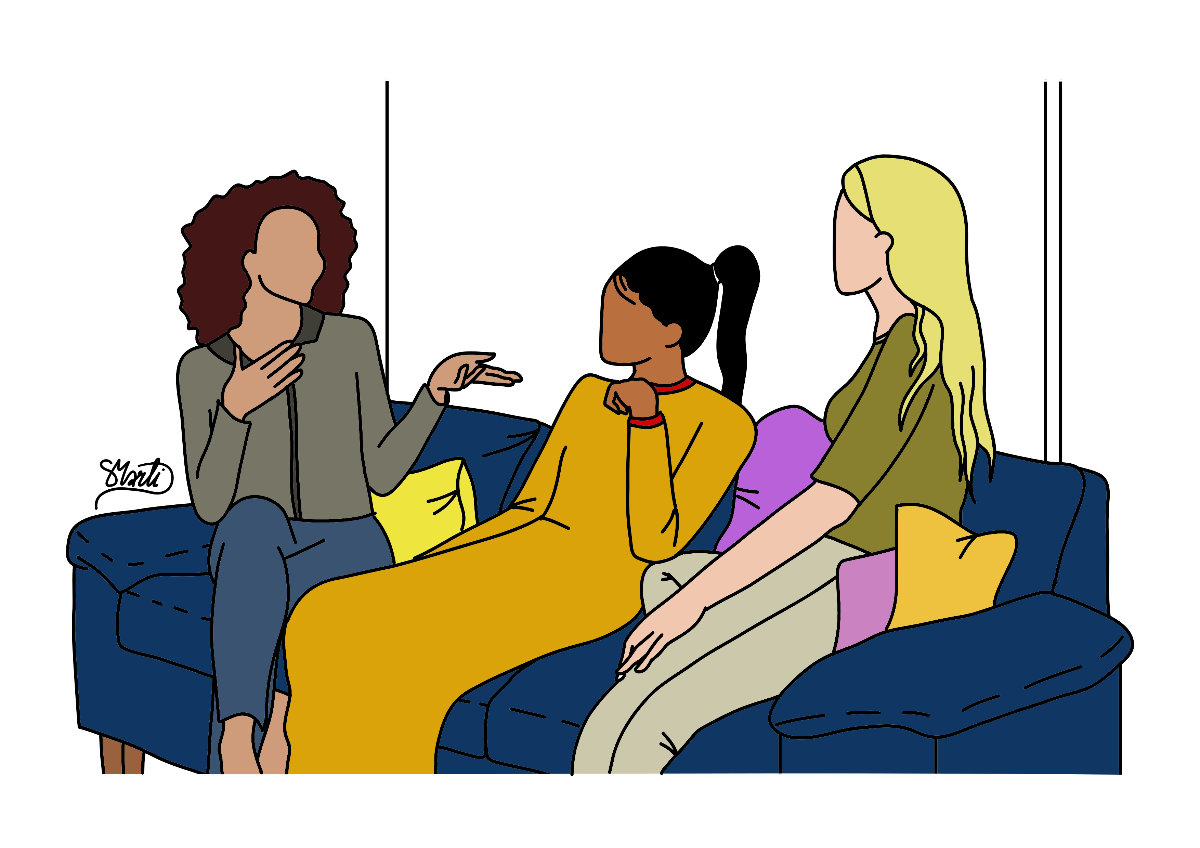
In the beginning, I was nothing. I didn’t have any skills that I could use. It was only the help and support from my teachers and husband that got me through the day. Now I have everything I need to cope with what happens!
I don’t have my family, as they haven’t changed, but I am happy with my life. My mum feels sad for me. I can see how she is in a difficult situation too. She cares for me but also cares for my dad. I speak to her every day and now we have a good relationship. I don’t speak to anyone else in the family though.
It has been difficult for me to feel confident. With my family I was always different – I wasn’t able or allowed to do anything on my own and I was afraid even to talk to my own parents. Now, as time passes, I can see that I am able to talk to other people! I can manage in many different situations.
My next goal is to move on from the YCH, start my study again and find a part time job. When I finish this academic year my plan is to move in with my husband and live with him. I’m not sure where that would be, as he’s now in Italy. We don’t know where we will start our life, but this decision is exciting too! My husband wants me to continue my studies, and I feel confident about the unknown.
I still don’t know who I am as a person. I am still confused by myself. Most of the people I have met say I am a kind-hearted person and friendly, but I’m never sure who I am. One thing I do know is that I am no longer the person who came here two years ago. That person was afraid of everything and didn’t know how to do even the simplest things. The person I am now can manage, and knows how to do what she wants to do.
I am still hoping that my parents will one day accept us and we will be able to live a happy family life. I want to make my parents proud. For my father it was totally normal to be controlling. His parents were like this, his parents’ parents too. It is a generational and cultural issue.
Some parts of my Asian culture are very good, but some of it is very bad. Here in the UK, the government and the teacher can help, but in my home country, no one would have helped or even cared. In my country, to get help, you have to give something. People always want to take advantage of a girl. I feel lucky to be able to stay in this country and have this kind of support.
It was the most important year of my life and best and worst at the same time.
Everything changed in that year. My life went upside down! Life for me is an adventure, made of ups and downs. Life is so full of adventure. I feel proud of what I did. Now I am a little bit stronger than before.

A Small Light
“I lived in this house for about a year and a half. It was there in Chiswick that I began to understand what it means to live in a place with clear rules and at the same time with care.
One sentence you once shared about me has stayed with me ever since:
“You are a friendly and positive young man who
makes the best of what is given to him.”
For someone who grew up being called weak, incapable and a problem, reading such a sentence was like hearing in someone else’s words what I have tried to prove to myself my whole life.
Thank you for the protection, for the patience and for this sentence.
May it accompany me like a small light
whenever other voices want to say something different.”
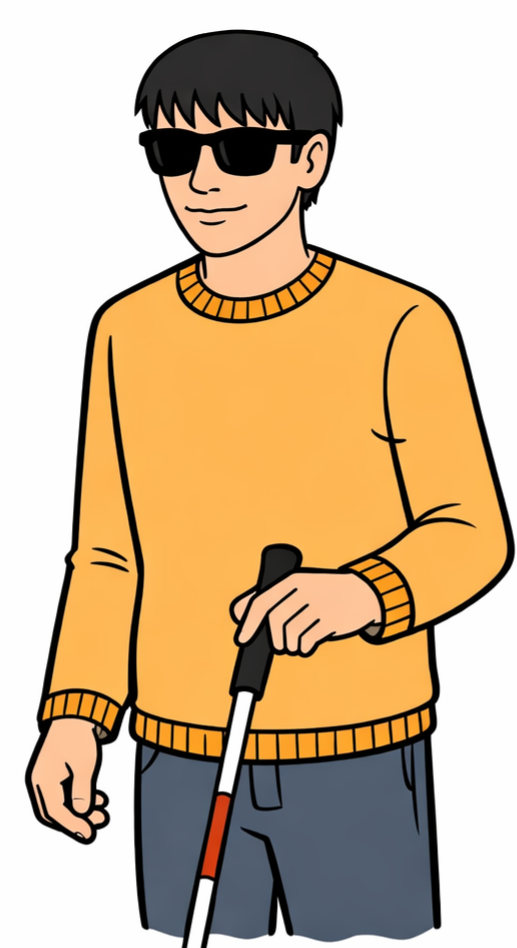
A young man who has lived with us is currently writing a short report about his life and has written to us. His childhood was marked by great challenges. When he began to lose a significant part of his hearing and vision due to his health condition, he was rejected by his parents.
Some time ago, we gave him a short text about his time with us, as he would like to write down his life story. He wrote a reply:
After his time with us, he was able to find a new home in a residential block for people with visual impairments, where he can now live independently. We were made aware of this possibility by an older man from our church. Connections like this are of immeasurable value to us. Time and again, we experience that many different people are needed for lasting change.